
The One Date That Decides What Your Laguna Beach View Is Worth
September 10, 2026
September 10, 2026
What do you actually own when you buy a view in Laguna Beach? Not the water. Not the horizon. What the city's own ordinance protects is a single photograph in time, tied to the day you closed escrow or November 4, 2003, whichever came first. Everything past that date, the neighbor's fast-growing pine, the hedge nobody trimmed for a decade, falls under a legal process most buyers never read before they fall in love with a listing photo.
That distinction matters more than the square footage in a lot of Laguna transactions, and it rarely comes up until something goes wrong.
Laguna Beach's View Preservation and Restoration ordinance addresses outward views and the sunlight that reaches a property. What it protects, though, is not the view in front of you today. It's the view that existed on the date you acquired the property, or November 4, 2003, whichever is earlier. If you bought your home in 1998, your legal baseline is 1998. If you bought it last month, your baseline is last month, and anything already blocking your view on that day is simply your view now. You have no claim to restore something you never had.
The city is specific about what counts as proof. Photographs must show the actual pre-existing view, and the ordinance rules out anything pulled from a real estate website as acceptable evidence. Enhanced or altered images don't qualify either. Neither does a view glimpsed from a hallway, closet, mechanical room, bathroom, or garage. If your best evidence of a past ocean view is the listing photo from when the home last sold, the city will not accept it, and that leaves a real gap for anyone who assumed the MLS archive would double as their legal file.
The ordinance actually splits into two separate mechanisms, and picking the wrong order can quietly cost you a right you didn't know you were giving up.
View Restoration is the reactive tool. It lets a property owner try to recover a view that vegetation has already impaired, through mediation and, if that fails, a hearing before the five-member View Restoration Committee.
View Preservation is the proactive tool. It lets an owner file for a Record of View, a photographic benchmark of an unobstructed view as it exists right now, before anything blocks it. This doesn't cap how tall a neighbor's landscaping can grow. It just sets the reference point the city will use later if a dispute ever comes up.
Here's the part that catches people off guard: you can file a View Restoration claim first and then follow it with a View Preservation filing to lock in whatever view remains. But if you file for Preservation first, the door on Restoration closes. You cannot go back and claim a view you didn't preserve at the outset. For a buyer weighing whether to document a view now or wait and see, that sequencing is not a minor detail. It's a one-way decision.
The process has a price tag, and it has climbed since the ordinance first went into practical use. In 2015, the Laguna Beach Indy reported that the mediation fee was $500 and the subsequent restoration claim fee was $630, meaning a claimant paid a minimum of roughly $1,130 before an arborist ever touched a branch. Add arborist bids and trimming costs, and total costs at that point ran closer to $1,500. An appeal to the City Council, if either side wanted one, carried its own $2,500 fee.
By 2019, Malakai Sparks reported a mediation fee near $748 and a hearing fee near $794, plus roughly $200 to notify neighboring property owners of the hearing, pushing the pre-remediation cost of a fully contested claim well past $1,700 before any tree work begins.
| Stage | Approximate cost reported |
|---|---|
| Mediation (2015 figures) | $500 |
| View Restoration claim (2015 figures) | $630 |
| Combined minimum before arborist costs (2015) | $1,130 |
| Total including arborist work (2015) | roughly $1,500 |
| Council appeal fee (2015) | $2,500 |
| Mediation (2019 figures) | roughly $748 |
| Committee hearing plus neighbor notice (2019 figures) | roughly $994 |
The upfront cost functions as a quiet filter. Some owners with a legitimate obstruction simply never file, because the process is expensive before it's even certain to work. That means a view-impaired home can sit on the market at a discount that has nothing to do with the underlying obstruction being unfixable and everything to do with nobody having spent the money to fix it yet. For a buyer comfortable fronting that cost, there can be real upside sitting behind an unresolved claim.
The single biggest misunderstanding buyers bring to a Laguna Beach view home is assuming this law covers everything that could block their view. Title 12, Trees and Vegetation, of the Laguna Beach Municipal Code covers vegetation. That's it.
If a neighbor pulls a legal permit to add a second story, and that addition blocks your ocean view, the View Preservation and Restoration ordinance offers you nothing. A buyer who assumes the view ordinance is a backstop against any future obstruction is assuming protection the law was never written to provide.
Laguna Beach didn't invent this approach. Its council studied Rancho Palos Verdes' older, more established view ordinance while drafting its own, and the comparison is instructive. As of a 2016 report in the Laguna Beach Indy, Rancho Palos Verdes had grown from about 20 claims a year initially to a system where 90 percent of that city's view disputes were being resolved through mediation rather than a full hearing. Its process also draws a distinction between "near" and "far" views and allows only one defensible view per property, forcing a homeowner to pick their single most significant sightline rather than stacking multiple claims. At that time, Rancho Palos Verdes ran an annual mediation budget of roughly $42,000, and once that budget was exhausted for the year, remaining claims had to wait until the next cycle.
Laguna's version is younger and has not accumulated that same decade-plus track record. The city's View Restoration Committee, five local residents appointed by the City Council, generally meets on the second Wednesday of each month, though the city's own calendar shows the committee's scheduled session this September was canceled for lack of business.
If you're buying: the moment escrow closes, your legal view baseline is set. Take your own dated, unaltered photographs from your actual living spaces, not from a bathroom or garage, and keep them. The city will not accept a listing photo as proof later, so don't assume the MLS record does that job for you.
If you're selling a home with an obstructed or partially obstructed view: understand what a restoration claim would actually cost and how long it might take before you decide whether to pursue one yourself or price the home to reflect the opportunity for a buyer to pursue it.
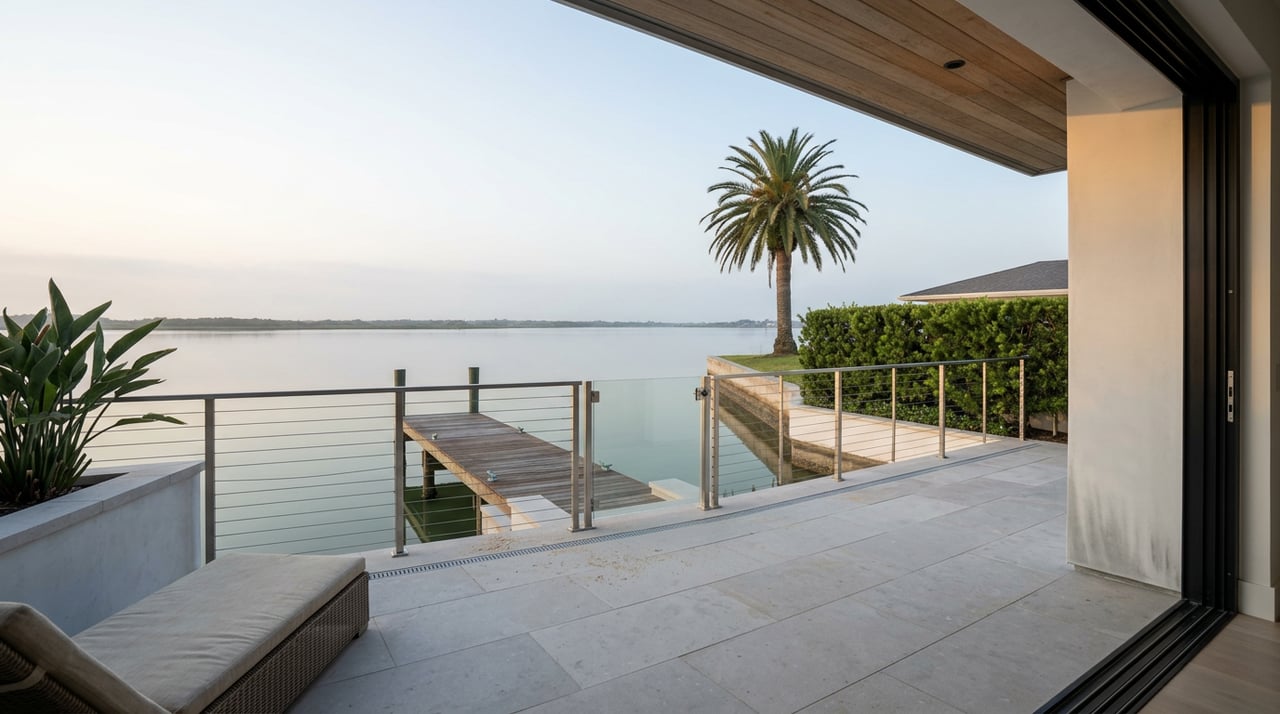
Either way, the view isn't just a feature of the home. It's a legal status with a paper trail, and knowing where that paper trail starts is worth more than another walkthrough of the balcony.
Does the ordinance guarantee my view will never be blocked? No. It only addresses vegetation-based obstructions, and only for the view that existed on your baseline date. It does nothing for structural additions, which fall under a separate design review process.
Can I use photos from the property's old real estate listing to prove my past view? No. The city specifically excludes real estate website photos, along with any altered or enhanced images, as acceptable evidence.
If I buy a home where the view is already partly blocked, can I have it restored? Only if the obstruction grew after your baseline date. Whatever is already blocking the view on the day you acquire the property becomes your legal starting point, not something you can claim to restore.
If you're weighing a view property in Laguna Beach, whether you're trying to price in an obstruction or protect a view you already have, it helps to talk through the specifics before you write an offer or sign a listing agreement. Reach out to Lighthouse Signature Estates for a free home valuation, and let's walk through what your view is actually worth on paper, not just from the balcony.
This article is general information, not legal, tax or financial advice. Consult a qualified professional about your situation.
Stay up to date on the latest real estate trends.


Explore rewarding opportunities to work with Lighthouse Realty Assoc Inc. - a leading real estate company in California. Start your journey to a prosperous career today!